
Roof Systems
Spray Polyurethane Foam Roofing in Green Bay, WI
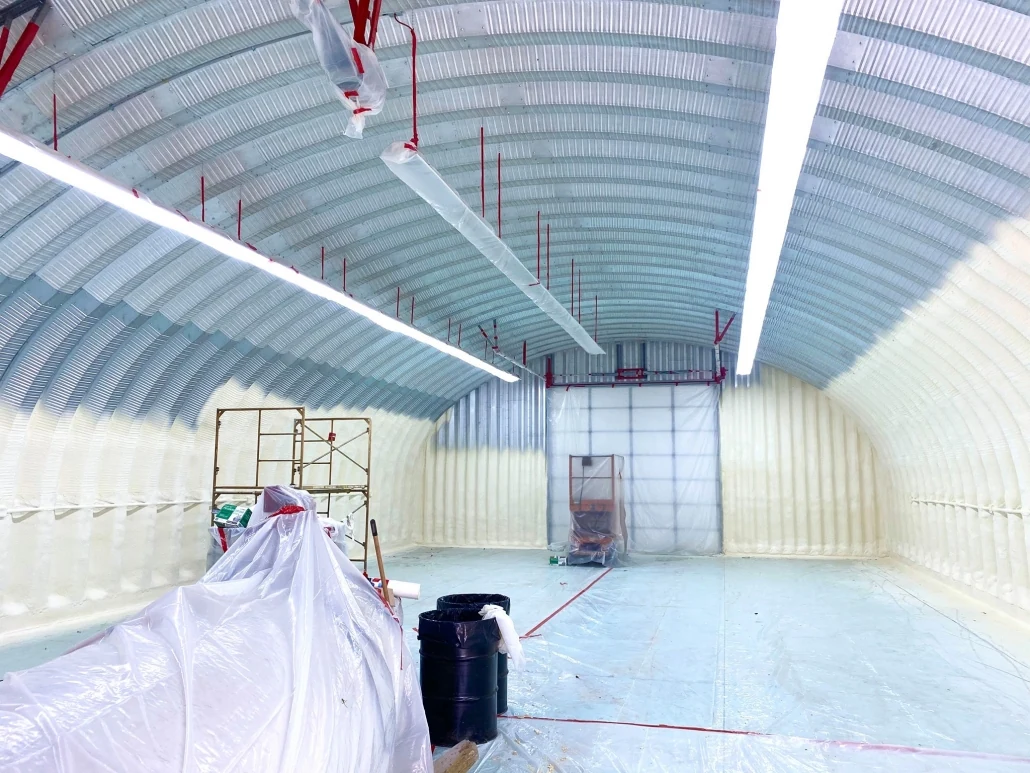
Spray Foam for Vapor Control on Green Bay Cold Storage and Retrofit Roofs
Spray polyurethane foam combines insulation and waterproofing in one continuous, self-flashing layer, and on cold storage and refrigerated buildings around Green Bay's food processing corridor, that combination solves a vapor drive problem that layered systems handle less directly.
One Continuous Layer Instead of Three Stacked Ones
Most single-ply systems separate the vapor retarder, insulation, and membrane into distinct layers, each with its own seams and laps where vapor can find a path through. SPF is sprayed as a continuous, unbroken closed-cell foam that acts as both insulation and a vapor-resistant layer in one application, with no laps for moisture to travel through.
On refrigerated warehouse and cold storage roofs, where interior humidity and temperature differential drive vapor upward through the assembly constantly, that continuous-layer quality is a real advantage over a layered system with dozens of lap joints across the roof field.
We spec the foam thickness against the specific refrigeration setpoint of the space below, not a generic insulation target, since a freezer roof and a cooler roof carry meaningfully different vapor drive pressure.
Why Fewer Joints Matter Most at Curbs and Pipe Penetrations
SPF is sprayed directly over curbs, pipes, and penetrations, forming a continuous seal without the separate flashing pieces and adhesive joints a single-ply system needs at those same details. Fewer discrete joints means fewer places for a freeze-thaw cycle to open a crack over time.
That said, SPF's foam surface still needs a protective coating, usually acrylic or silicone, applied over it to handle UV exposure and foot traffic. The coating and its recoat schedule are as much a part of the spec as the foam itself, which is a distinction we walk through with every owner before they sign off on an SPF proposal.
Weight Savings on Structures Never Designed for a Heavy Recover
Spray foam adds meaningfully less dead load to a roof than a multi-ply system like modified bitumen or a heavy tapered insulation recover, which matters on some of the older paper mill and industrial buildings around Green Bay where structural capacity was set decades before current rooftop equipment and snow load expectations existed.
We check structural drawings before recommending SPF on an older building the same way we would for any recover system, but the lighter foam assembly often gives us more flexibility on buildings where a heavier system would require structural reinforcement first.
Because SPF forms the insulation layer itself, tapering the foam application can correct drainage and reduce ponding at the same time the roof gains R-value, which is a useful combination on a low-slope roof carrying real snow load.
The Topcoat Is Not Optional
The protective topcoat's UV and traffic resistance, and its recoat interval, become the main maintenance item once the foam is in place and cured. Skipping or delaying a scheduled recoat exposes the foam substrate to UV degradation, which is the most common cause of premature SPF roof failure we see on service calls.
We build the recoat interval into the maintenance plan at the time of install, rather than leaving it as a decision the owner has to remember to make on their own years later.
- Confirm structural capacity and compare foam weight against alternative recover systems
- Verify vapor drive calculation from actual refrigeration or conditioning setpoints
- Schedule application within the foam's required temperature and humidity window
- Plan the protective topcoat and its recoat interval as part of the original spec
- Use tapered foam application to correct drainage where ponding exists
Fitting SPF to Irregular Deck Geometry on Older Buildings
Some of the older paper mill and processing buildings around Green Bay have roof decks with irregular framing, mismatched additions, and dozens of pipe penetrations added over decades of operation. A rigid board insulation system struggles to conform to that kind of geometry without extensive cutting and custom detail work at every transition.
Because SPF is sprayed as a liquid that expands and cures in place, it follows the deck's actual contours and self-seals around irregular penetrations without the piecework a rigid system requires. On a roof with heavy penetration counts, that difference in install time and detail labor is often the deciding factor in favor of foam.
We still map every penetration and curb before spraying, since foam thickness needs to be controlled evenly across the field even when the underlying deck geometry is irregular.
SPF Roofing Questions on Refrigerated Buildings
Does spray foam work well in Wisconsin winters?
Application has to happen within a defined temperature and humidity window, generally warmer months, but once cured and properly coated, SPF performs well through winter freeze-thaw cycling.
How often does the protective coating need to be reapplied?
Recoat intervals vary by coating type and traffic level, but most SPF roofs need a recoat cycle roughly every 10 to 15 years to maintain UV and weathering protection.
Is SPF a good fit for a roof with heavy foot traffic?
It can be, but heavy or frequent traffic areas need a more traffic-resistant topcoat or walk pads, since the foam substrate itself is softer than a membrane surface.
Can SPF be applied over an existing roof?
Often yes, over a sound, dry substrate, which is part of why it is attractive as a recover option on older buildings where tear-off would be costly or structurally difficult.
Why is SPF specifically good for cold storage roofs?
Its continuous, lap-free application eliminates the joints where vapor typically finds a path through layered systems, which matters most on buildings with a large interior-to-exterior temperature and humidity differential.