
Roof Systems
TPO 80 Mil Roofing in Green Bay, WI
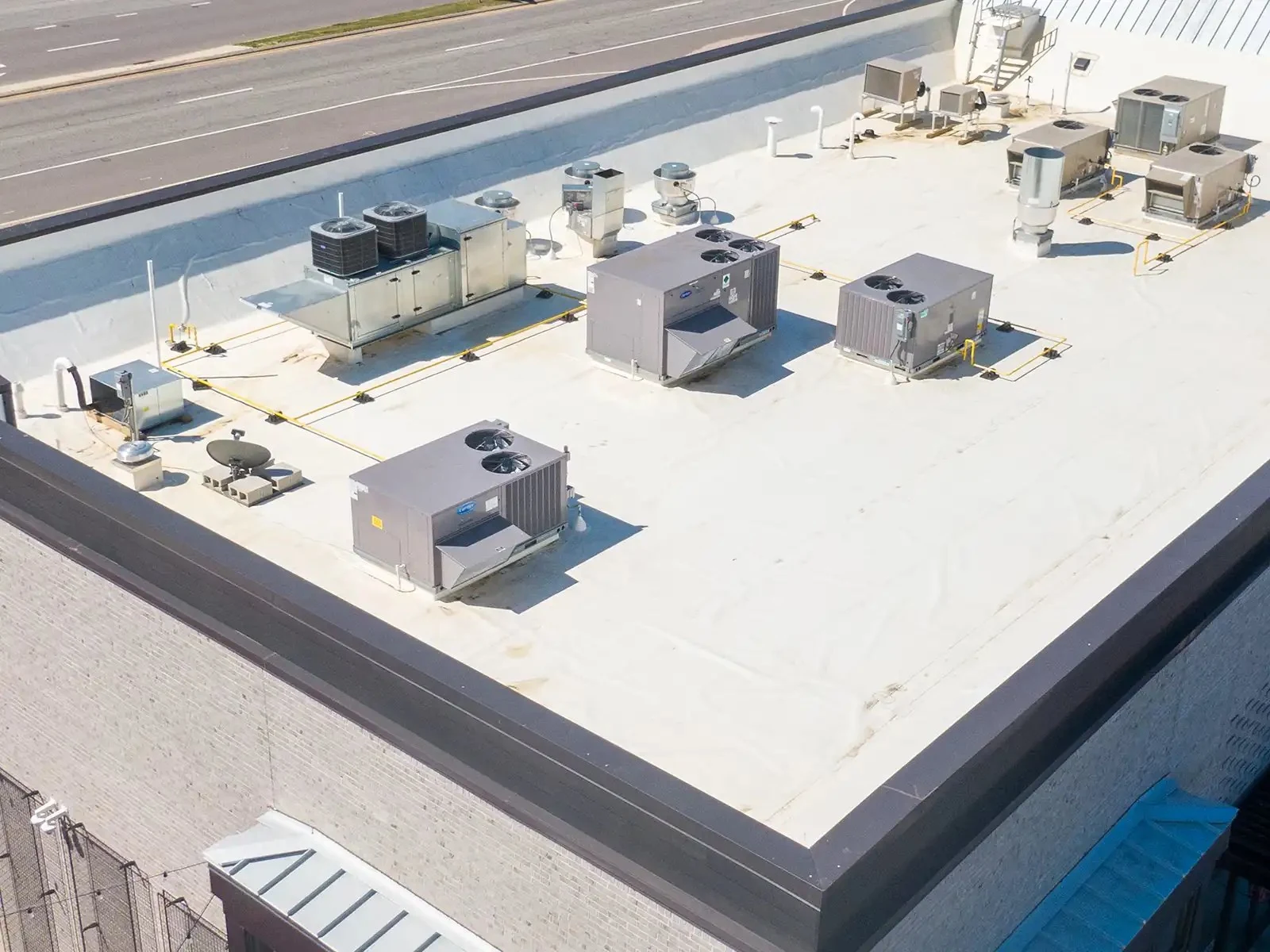
TPO 80 Mil for High-Traffic and Long-Hold Green Bay Roofs
An 80 mil TPO membrane costs more per square foot than 60 mil on day one, and on the right building that extra material cost gets paid back through a longer service life and fewer service calls. We spec it where rooftop traffic, equipment loads, or a longer ownership horizon justify the difference.
Where 80 Mil Earns Its Premium Over 60 Mil
The lifecycle math changes once foot traffic enters the picture. A roof with quarterly HVAC service, seasonal snow-load clearing near mechanical curbs, or a maintenance crew walking the same paths repeatedly wears a thin membrane faster than a thick one, and the wear shows up as pinholes and scuffing years before the membrane's rated life is up.
On a 20-year-plus hold, we run the numbers both ways. If the owner plans to sell or the building has minimal rooftop traffic, 60 mil often wins on cost. If the building is staying in the portfolio and gets regular rooftop visits, 80 mil usually wins on total cost once you price out the earlier patch calls a thinner membrane tends to generate.
Rooftop Equipment Loads on Institutional Buildings
Schools, hospitals, surgery centers, and government buildings in and around Green Bay tend to carry more rooftop mechanical equipment per square foot than a plain warehouse box, and that equipment gets serviced on a fixed schedule regardless of weather. A K-12 building near Ashwaubenon or a municipal facility downtown might see a technician on the roof monthly through a Wisconsin winter.
Each of those visits means boots, tool bags, and sometimes dropped hardware crossing the membrane near curbs and walkways. We map the service paths before finalizing the spec, and on buildings with heavy rooftop equipment counts that mapping is usually what tips the decision toward 80 mil rather than 60.
Puncture Resistance During Winter Snow-Load Clearing
Snow removal crews working a flat commercial roof after a heavy Green Bay storm are walking on a membrane that is colder and stiffer than it is in July, and they are often carrying shovels or roof rakes near parapets and drains where drift depth runs highest. An 80 mil sheet tolerates that combination of cold stiffness and foot traffic with more margin than a 60 mil sheet.
We also look at how snow gets pushed off the roof. Dragging drifted snow across a membrane toward a scupper or internal drain concentrates abrasion in a narrow path, and on buildings where that clearing happens every winter, the thicker membrane holds up better in that exact wear zone.
Fastening Patterns for Longer Hold Periods
The fastening plan for 80 mil follows the same exposure-category and roof-height analysis as any mechanically attached TPO system, but the plate and fastener count still has to match the building's actual wind zone rather than a generic table pulled from a catalog. Snow drift loading against parapets and screen walls factors into that plan the same way it does on a 60 mil job.
Where an owner is planning to hold a building for 20 years or longer, we also look at fastener corrosion resistance and plate material, since a fastening system installed today has to perform through several decades of Wisconsin freeze-thaw cycling before the membrane itself is due for replacement.
- Compare 20-year lifecycle cost per square foot against 60 mil before specifying
- Map rooftop service paths and equipment curb locations
- Confirm fastener plate corrosion rating for long-hold buildings
- Set fastening pattern against actual exposure category and drift zones
- Probe heat-welded seams during post-install and first-year inspections
- Check application temperature at time of install against the manufacturer's window
Chemical Exposure Near Paper and Food Processing Sites
Like other TPO thicknesses, 80 mil resists most low-concentration steam and condensate drifting across roofs near the paper and packaging operations on the west side and around De Pere, but it is not the preferred spec where kitchen or process exhaust discharges oils and grease directly onto the membrane. On food processing and grocery buildings with heavy exhaust discharge, we typically move to PVC instead.
Vapor drive from a conditioned or refrigerated interior still has to be handled at the insulation and vapor retarder layer, not the membrane surface. We spec that layer against the building's interior conditions independently of whether the membrane on top is 60 or 80 mil.
What Owners Ask Before Approving an 80 Mil Spec
Is 80 mil worth the extra cost on a simple warehouse?
Usually not, if the roof sees minimal foot traffic and the owner is not planning a long hold. That is exactly the profile where 60 mil wins the lifecycle-cost comparison.
Does thickness change the wind uplift rating?
Not directly. Wind uplift performance is driven mainly by the fastening pattern and attachment method, though a thicker membrane does add some margin against tears at fastener points during extreme wind events.
How much longer does 80 mil actually last than 60 mil?
Both are rated for similar base service life under ideal conditions, but on high-traffic roofs 80 mil typically avoids the early puncture repairs that shorten a 60 mil membrane's real-world life.
Can 80 mil be installed as a recover over an existing roof?
Yes, with new insulation and a cover board, provided the deck and structure can carry the added weight and a moisture scan confirms the existing substrate is dry.
Does 80 mil need a different fastening pattern than 60 mil?
The pattern is set by wind zone and roof height rather than membrane thickness, so the same exposure analysis applies, though plate spacing may be adjusted slightly for the heavier sheet.