
Roof Systems
Silicone Roof Coating in Green Bay, WI
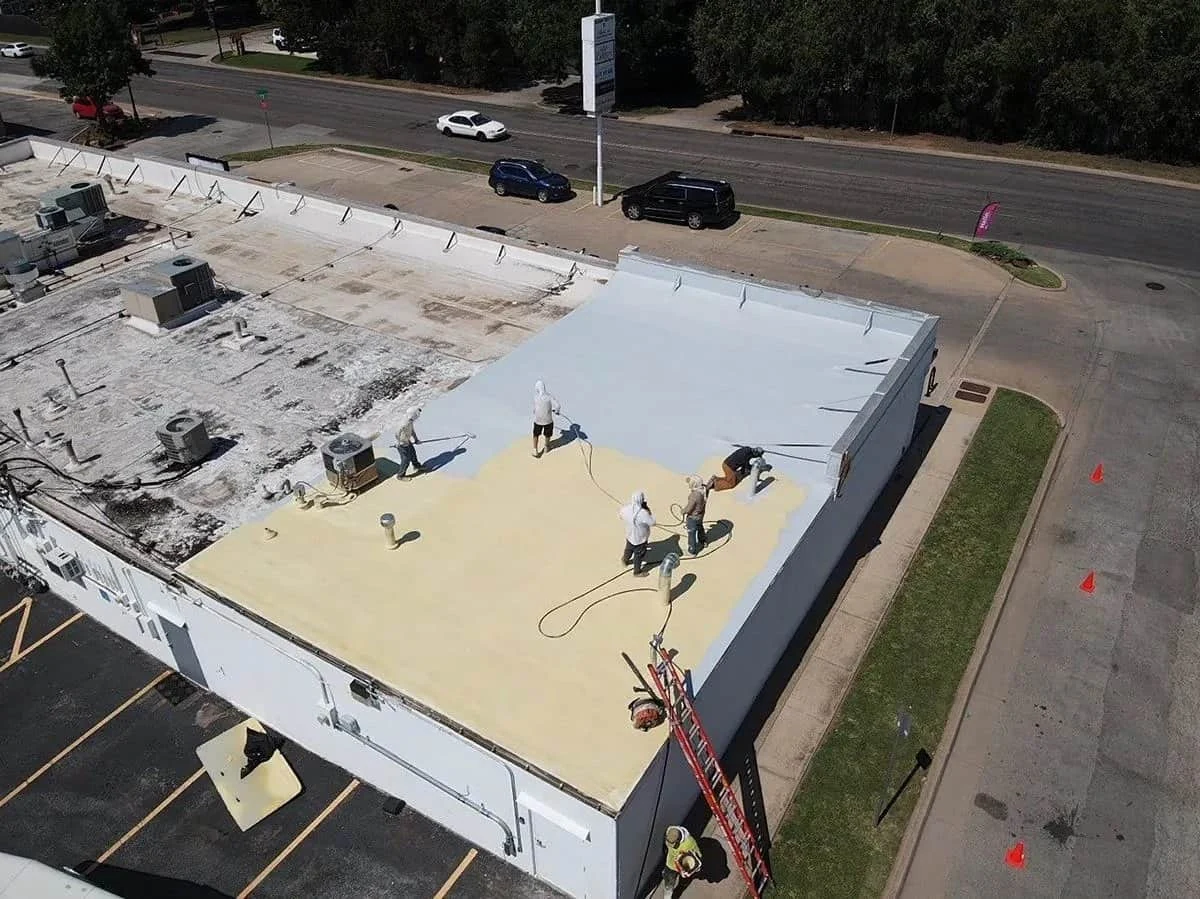
Silicone Coating as a Bridge Strategy on Aging Green Bay Roofs
A silicone coating is not a roof system on its own; it is a restoration layer applied over an existing membrane, and the case for it comes down to whether the substrate underneath is sound enough to make coating cheaper than tear-off.
What a Coating Restores and What It Doesn't
Silicone coating is applied in a fluid form and cures into a continuous, elastomeric membrane bonded to the existing roof surface. It restores weathertightness and UV protection to an aging membrane, most commonly over existing built-up, modified bitumen, or metal roofs where the substrate is still structurally sound but the surface has degraded.
We do not coat every aging roof we inspect. If the substrate has wet insulation, deck deterioration, or seam failures below the surface, coating traps that problem under a new layer instead of fixing it. That inspection has to come before any coating quote, not after the crew shows up with material.
On a roof that passes inspection, coating restores the surface performance without disturbing the existing deck and insulation, which also avoids the disruption a full tear-off causes to whatever operation is running underneath the roof.
We also check flashing condition at parapets and curbs before quoting, since a coating applied over a failing flashing detail will still leak at that point regardless of how well the field membrane performs, and repairing flashing separately from the field coating is a normal part of the scope.
Standing Water Is the Test Silicone Passes and Acrylic Doesn't
Silicone's biggest technical advantage over acrylic coatings is that it holds up under standing water without breaking down, which matters directly here because Green Bay's freeze-thaw cycle produces exactly that condition: snowmelt pooling at low points and refreezing overnight through most of the winter and into early spring.
That said, coating does not fix a drainage problem. If a roof has a chronic ponding area from a structural low spot, silicone coating extends the life of the membrane under that ponding water, but it does not make the ponding go away. We flag that distinction clearly in every coating proposal so the owner understands what the coating is and is not solving.
The Narrow Install Window a Wisconsin Schedule Has to Work Around
Silicone coating has to cure at temperatures and humidity levels within a defined range, which limits the install season here to roughly late spring through early fall in most years. We schedule coating projects with that window in mind rather than trying to force an install into marginal weather that risks incomplete cure.
Substrate moisture content matters as much as ambient temperature. A roof coated over damp insulation, even in ideal weather, will show blistering and adhesion failure within a season or two, which is why moisture scanning is a standard part of our coating scope, not an optional add-on we upsell later.
Running the Coat-Versus-Tear-Off Math
Coating typically runs a fraction of the cost of tear-off and replacement, which is the entire financial case for it. On a roof with a sound substrate and 5 to 10 years of remaining service life at stake, coating can add years to that life for a small percentage of replacement cost. On a roof past that point, coating is usually money spent delaying an inevitable reroof rather than extending a genuinely serviceable one.
We give owners a straight comparison of both numbers, including a realistic estimate of how many more years the coating buys, before recommending either path.
- Run a moisture scan on the existing substrate before quoting any coating work
- Verify existing drainage design; coating does not fix a structural low spot
- Schedule application within the manufacturer's temperature and humidity window
- Confirm existing seams and flashings are sound before coating over them
- Compare coating cost against realistic remaining service life, not price per square foot alone
Coating Programs Across a Multi-Building Portfolio
Owners with several industrial or warehouse buildings in the Green Bay area often stagger coating projects across a few years rather than tackling every roof at once, prioritizing whichever building shows the earliest signs of membrane degradation or the highest risk of a leak reaching operations below.
We inspect the full portfolio on the same visit where practical and rank buildings by remaining substrate life, so an owner can budget coating work as a planned multi-year program instead of reacting to leaks one at a time as they show up.
That approach also lets us batch scheduling within the same narrow application window each year, which keeps mobilization cost down compared to scheduling each building as a separate emergency call.
Silicone Coating Questions From Building Owners
Can any roof be coated instead of replaced?
No. A roof with wet insulation, deck damage, or failed seams needs those issues addressed first, or the coating will fail early and the underlying problem will still be there.
How long does a silicone coating typically last?
With a sound substrate and proper application, silicone coatings commonly perform for 10 to 15 years before recoating is needed, though actual life depends heavily on substrate condition.
Does coating stop ponding water from forming?
No, coating protects the membrane under standing water but does not correct the drainage slope causing the ponding in the first place.
What time of year can coating be applied here?
Generally late spring through early fall, when ambient temperature and humidity fall within the manufacturer's cure requirements.
Is silicone better than acrylic coating for this climate?
For roofs with ponding water exposure, yes, silicone resists breakdown under standing water better than acrylic. On a well-drained roof without ponding, acrylic can be a lower-cost option worth comparing.