Roof Systems
EPDM Black Roofing in Green Bay, WI
Black EPDM for Green Bay's Simple, Large-Format Roof Planes
Black EPDM has been the default low-slope membrane on Wisconsin industrial buildings for decades, and on a big, simple roof plane with minimal detail work it still beats newer single-ply options on installed cost per square foot.
The Economics of Rubber on Big, Simple Roof Decks
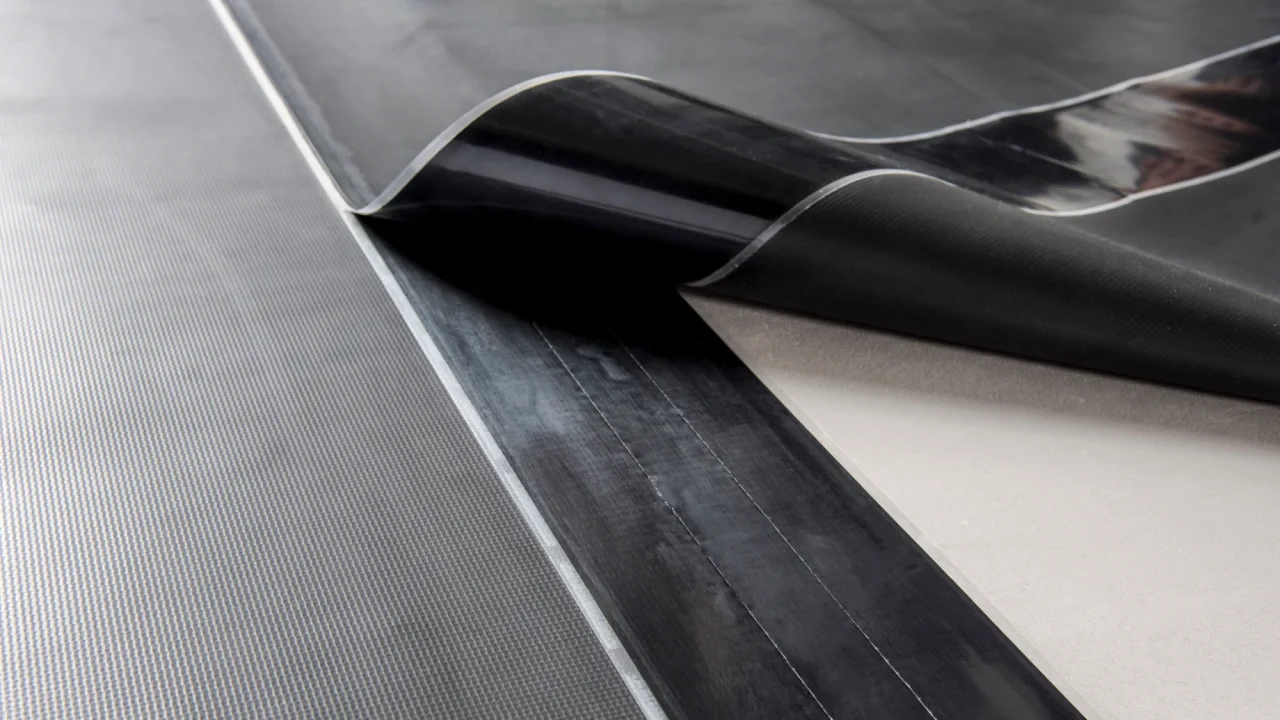
EPDM is a synthetic rubber sheet, manufactured and shipped in large-format panels that reduce the linear footage of seam per square foot of roof compared to narrower TPO or PVC rolls. On the distribution boxes and light-manufacturing shells along I-41 and through the Howard industrial park, fewer seams means less labor time and lower material cost on a straightforward rectangular deck.
We run the lifecycle number against 20 years, not the day-one bid. On a roof with a simple perimeter, no rooftop solar, and minimal curb count, black EPDM's lower material cost typically produces the lowest cost per square foot per year of any single-ply option we quote, provided the seam work holds up.
That last condition matters. EPDM's cost advantage disappears fast if the roof needs repeat seam repairs, which is why we do not treat EPDM as automatically the cheap option without first checking whether the building's roof geometry actually plays to its strengths.
Field Membrane Versus Seam: Where EPDM Actually Fails
Unlike TPO or PVC, EPDM seams are bonded with adhesive tape or liquid adhesive rather than heat-welded, and that bonded lap is the part of the system most likely to fail first. A tape seam installed outside its application temperature window, or one that was not rolled with even pressure at the time of install, is where we find the leaks on older EPDM roofs.
We inspect seam integrity as the first step on any EPDM roof evaluation, probing laps at T-joints and field seams before looking anywhere else on the roof. On a roof with sound seam work, black EPDM commonly runs 20 to 25 years with routine maintenance. On a roof where the seams were rushed at install, leaks show up well before that mark.
We document seam condition with photos at every inspection, because a slowly opening lap is easier and cheaper to catch and reseal than to discover after it has already let water into the insulation layer below.
How Black EPDM Behaves Through a Green Bay Winter
Rubber stays flexible at low temperatures better than most single-ply plastics, which matters on a roof that swings from single digits in January to a 40-degree February thaw and back within the same week. That flexibility means fewer stress cracks at corners and penetrations over the membrane's service life than a stiffer sheet would show under the same cycling.
Black EPDM's heat absorption also helps shed snow and ice faster on a sunny day than a white membrane would, which reduces the standing meltwater load that can refreeze overnight at low points. On a roof with a genuine ponding problem from poor slope, though, membrane color does not fix drainage; that is a tapered insulation and drain-placement issue we address separately.
What We Won't Put Black EPDM Near
Black EPDM handles ambient moisture and light steam drifting off nearby paper mill stacks reasonably well, but it is not the membrane we recommend where exhaust fans discharge oils, solvents, or grease directly onto the roof surface. Petroleum-based contamination softens and degrades EPDM's rubber compound faster than it degrades TPO or PVC, and once that contamination starts, coating over it does not solve the underlying problem.
- Probe every seam and T-joint before scoping repair versus recover
- Check tapered insulation slope at low points for standing water
- Confirm no oil or grease exhaust is discharging onto the membrane
- Verify flashing at parapets and curbs is mechanically secured rather than adhesive-only
- Document seam condition with photos for the ownership file every inspection cycle
- Compare EPDM's material savings against a roof's actual seam-linear-footage before quoting
Recover Versus Tear-Off on an Aging EPDM Roof
When an EPDM roof around Green Bay reaches 18 to 20 years old, the question is whether it is leaking and, separately, whether the insulation underneath is still dry enough to build on. We core-cut sample sections before recommending a recover, because wet insulation under a sound-looking membrane is common on older EPDM roofs and it changes the entire scope of the job.
If the deck and insulation test dry, a recover with new cover board and fresh EPDM over the existing membrane can be a lower-cost path than a full tear-off, provided the roof's drainage and structural capacity support the added layer. If the insulation is wet, tear-off is the only responsible option regardless of how the membrane surface looks from the ground.
We put both scenarios in front of the owner with real numbers attached, since guessing at insulation condition to save a day of testing time has led to owners paying for a recover that failed within a few years on buildings we did not originally inspect.
EPDM Questions From Building Owners
Is black EPDM outdated compared to TPO?
It is an older technology but not obsolete. On simple, large-format roofs where thermal cycling resistance and material cost matter more than detail-heavy seam work, it is still a sound choice.
Why do EPDM roofs leak at seams more than TPO roofs?
EPDM seams rely on adhesive bonding rather than a heat-fused weld. Adhesive seams are more sensitive to installation temperature, surface prep, and roller pressure at the time of install than a welded seam is.
Does black EPDM increase cooling costs?
It absorbs more solar heat than a white membrane, which is a minor factor on most industrial buildings in this climate but can matter more on a conditioned space with thin roof insulation.
Can black EPDM be coated to extend its life?
Yes, a silicone or acrylic coating can extend service life on an EPDM roof with a sound substrate, provided the membrane is clean, dry, and every seam is inspected and repaired first.
How long does black EPDM typically last here?
With good seam work and routine maintenance, EPDM roofs in this climate commonly reach 20 to 25 years before a full replacement is warranted.