
Roof Systems
PVC Roofing Systems in Green Bay, WI
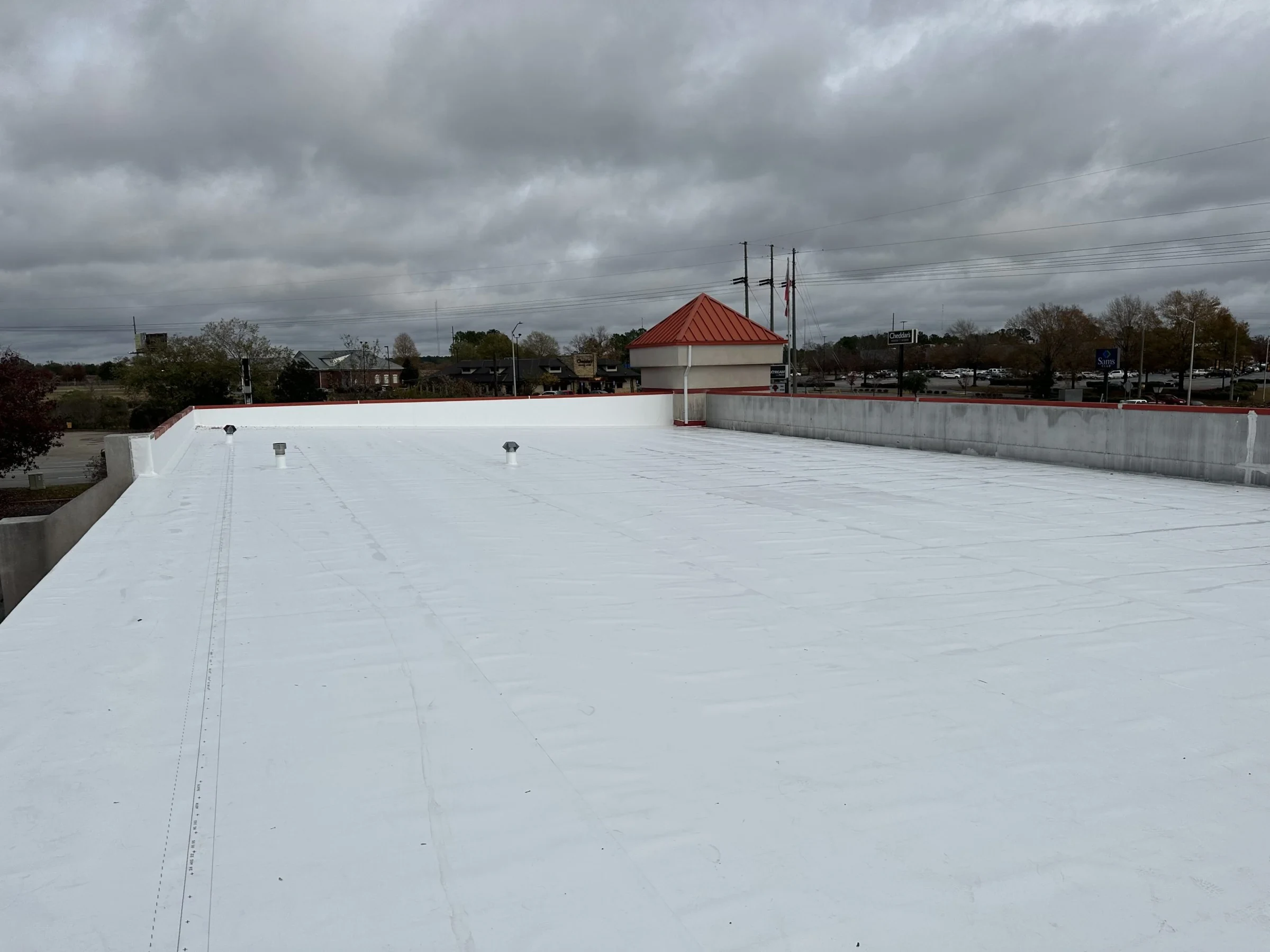
PVC Membrane Where Grease and Chemical Exhaust Rule Out Everything Else
PVC costs more per square foot than TPO or EPDM, and on roofs exposed to grease, oil, or industrial chemical drift, that extra cost buys a membrane that does not need replacing years earlier than the rest of the building's mechanical life.
The One Reason to Pay More for PVC
PVC's plasticized vinyl chemistry resists petroleum-based oils, greases, and many industrial chemicals significantly better than the rubber and polyolefin chemistries in EPDM and TPO. Around Green Bay that matters most on food processing plants with kitchen or process exhaust discharge, and on buildings near paper mill operations where exhaust condensate can carry chemical residue onto the roof surface.
We do not spec PVC everywhere. On a clean warehouse roof with no exhaust discharge, the extra cost over TPO does not buy the owner anything. The decision is driven by what is actually being exhausted onto that specific roof, not a blanket preference for a premium membrane.
We walk the roof and check every exhaust point before quoting, because the difference between a light steam plume and a grease-laden discharge fan is the difference between a roof where TPO is fine and one where PVC is the only membrane worth specifying.
Welding PVC at Curb-Heavy Plant Roofs
Like TPO, PVC seams are hot-air welded into a fused bond rather than adhered, which gives the seam the same freeze-thaw advantage over adhesive-bonded EPDM seams. PVC is also a stiffer sheet than TPO, which some crews find welds more consistently in cooler ambient conditions, though we still hold installs to the manufacturer's stated temperature window regardless.
On roofs with a lot of curb and pipe penetration detail work, which describes most food processing plants with rooftop exhaust equipment, PVC's weldability at those details is as important as the field membrane's chemical resistance. A membrane that resists grease in the field but leaks at a poorly welded curb detail has not solved the owner's actual problem.
We probe every seam and detail weld during the post-install walk on every PVC job, not a sample percentage, because the buildings that need PVC in the first place are usually the ones where a single failed detail causes the most damage.
What We Check Before Recovering an Old Mill Roof in PVC
Plant roofs with dense rooftop equipment layouts see the same drift-loading concerns as any equipment-heavy building in this climate, and PVC's fastening patterns get the same site-specific review as TPO based on exposure category and equipment placement.
We also check existing structural capacity closely on older paper mill and processing plant buildings before adding a PVC recover assembly, since some of that stock predates current snow load code and was not designed with today's rooftop equipment loads in mind. A recover that looks straightforward on paper can require structural reinforcement once the actual dead load is added up.
Running the Real Cost-Per-Year Number Against Cheaper Membranes
PVC typically runs highest among the single-plies on installed cost per square foot. We present that number against the realistic alternative: a cheaper membrane that degrades from chemical exposure and needs a full replacement inside 10 years instead of running a normal 20-plus year service life. On the right building, PVC's higher install cost produces a lower cost per square foot per year of actual service.
We put both numbers in front of the owner side by side, because a lower bid on the wrong membrane for the exposure conditions is not actually the cheaper option once the early replacement is priced in.
- Identify what is actually being exhausted onto the roof before specifying membrane type
- Confirm existing deck and structure can carry recover assembly dead load
- Match fastening pattern to actual rooftop equipment layout, not a default table
- Verify weld quality with probe testing at every seam and detail
- Compare installed cost against realistic service life for the exposure conditions
Matching PVC Reinforcement to the Rooftop Traffic Pattern
PVC membranes come in different reinforcement levels, and on a plant roof with regular technician traffic to condensers, exhaust fans, and rooftop process equipment, we specify a heavier reinforced sheet in those traffic corridors even when a lighter membrane would meet code minimums elsewhere on the same roof.
Walk pads at the busiest service paths add another layer of protection on top of the membrane itself, and on a food processing plant with daily rooftop visits from refrigeration or exhaust technicians, that combination of reinforcement and walk pads is usually cheaper over the roof's life than repeated puncture repairs in the same worn path.
We map those traffic paths from the mechanical contractor's actual service schedule rather than guessing at where foot traffic will concentrate, since the real pattern does not always match where the drawings suggest a technician would walk.
PVC Roofing Questions From Plant Owners
Why does PVC cost more than TPO?
The resin and plasticizer chemistry costs more to manufacture, and PVC membranes are often reinforced more heavily for the chemical-resistant applications they are typically specified for.
Will PVC handle direct grease exhaust discharge?
PVC handles grease and oil exposure better than EPDM or standard TPO, but heavy, sustained direct discharge should still be redirected or filtered where possible; no membrane is maintenance-free under constant grease contact.
Does PVC perform differently than TPO in cold weather?
The rubber-like flexibility differs slightly, but both are heat-welded single-plies with similar cold-weather seam performance when installed within the manufacturer's temperature window.
Can PVC go over an existing EPDM roof?
Direct compatibility issues exist between PVC and asphalt or certain EPDM adhesives, so a recover over existing EPDM needs a compatible separator layer or full tear-off, evaluated case by case.
How often should a PVC roof be inspected on a plant with exhaust discharge?
We recommend at least twice-yearly inspections on roofs with active chemical or grease exhaust, versus the standard annual inspection on a clean roof.