
Commercial Roofing Services
Edge Metal, Coping & Gutters in Green Bay, WI
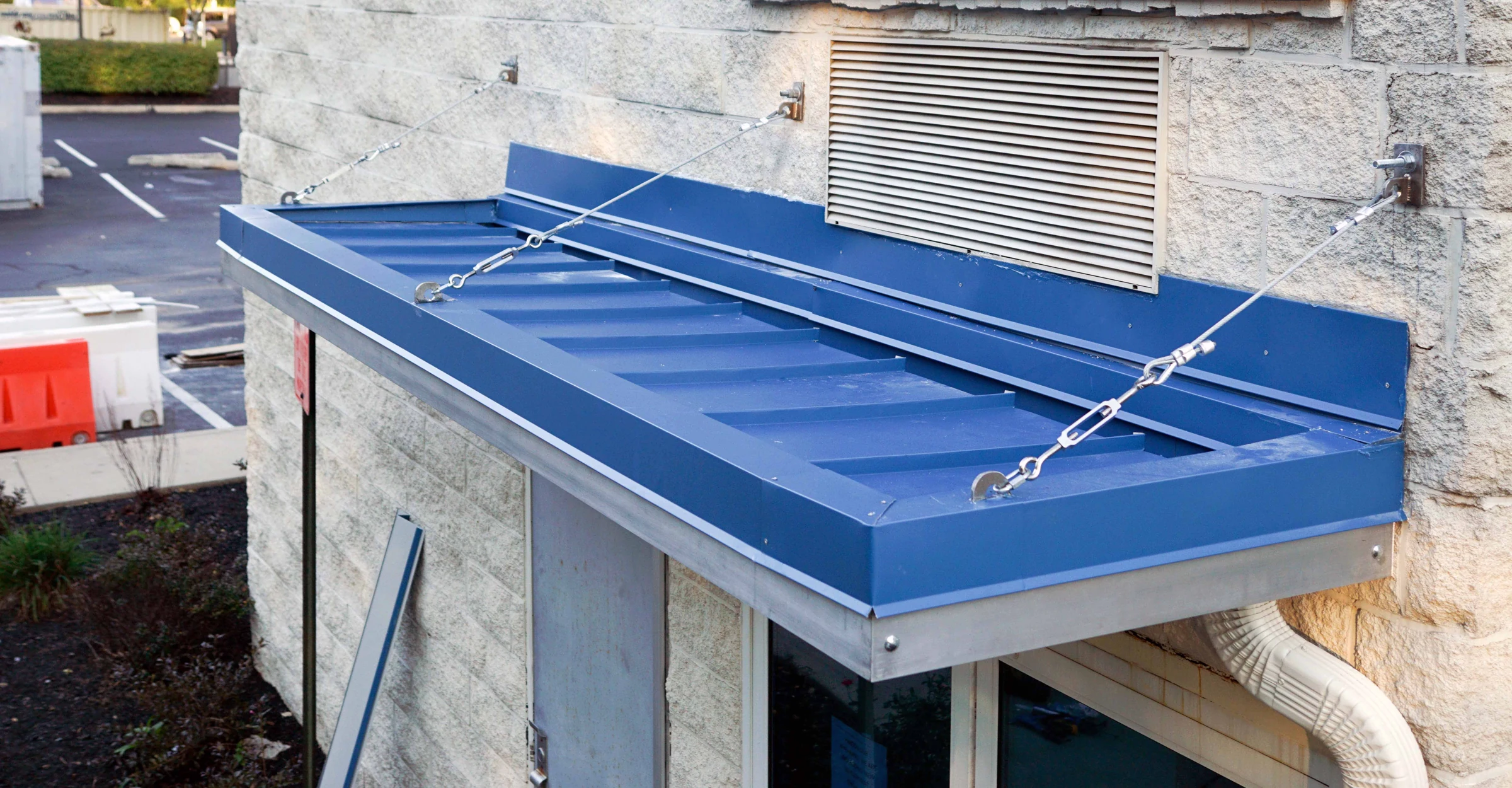
The Edge Details That Decide Whether Wind Peels a Roof Open
More membrane failures start at the roof edge than in the open field. Edge metal, coping caps, and gutters take the direct hit from wind uplift and carry the concentrated load of snowmelt runoff, and undersized or poorly fastened edge detail is one of the most common repeat-repair items we find on Green Bay roofs.
Wind Uplift and Why Edge Fastening Matters More Here
Wind pressure concentrates at roof corners and edges more than anywhere else on a low-slope roof, and spring wind off the bay during ice-out is exactly the kind of sustained lateral gust that finds a marginal edge detail. We spec edge metal fastening patterns to wind uplift testing standards rather than whatever was on the roof before, because a lot of older buildings have edge metal fastened to a spec that predates current wind design requirements.
Once wind gets under one section of edge metal, it can peel back a run of it like a can opener, taking membrane with it. Catching a loose section before it fails completely is far cheaper than the water damage and membrane repair that follow a full peel-back.
Coping Caps on Parapet Walls
Coping caps seal the top of a parapet wall and shed water away from the wall face, and a failed or poorly seamed coping joint lets water into the parapet wall itself, not only onto the roof. That kind of moisture intrusion can go undetected for a long time since it's inside a wall cavity rather than dripping onto a ceiling below.
We check coping seams and end caps as part of every edge metal inspection, since a coping failure often shows up as staining or efflorescence on the parapet's interior or exterior face well before it shows up as a roof leak.
Gutters and Downspouts Sized for Snowmelt, Not Summer Rain Alone
A gutter system sized for a typical summer rain event can be badly undersized for the volume of meltwater a heavy bay-effect snow load produces over a few warm days. We size gutters and downspouts with snowmelt volume in mind rather than rainfall tables alone, especially on buildings with sloped roof sections draining toward a gutter line.
Older gutter systems on buildings around Denmark, Wrightstown, and other Fox River towns were often sized decades ago against a much smaller design event. When we're already on site for a repair, we'll flag a gutter run that looks undersized for the roof it's serving, even if that wasn't the original reason for the call.
Ice buildup in an undersized or poorly pitched gutter creates its own ice dam, backing water up under shingles or membrane at the eave. Heat cable is sometimes the right answer for a chronic ice-dam gutter, but we'll assess whether the real fix is upsizing the gutter and improving pitch before we recommend adding equipment that needs its own maintenance.
What Edge Detail Work Includes
- Wind uplift-rated edge metal fastening at parapets and roof perimeters
- Coping cap replacement or reseaming at parapet walls
- Gutter and downspout sizing evaluated against snowmelt volume, not rainfall alone
- Ice dam assessment at gutter lines and eaves
- Fascia and drip edge repair where wind or ice has caused separation
- Heat cable installation where gutter and pitch corrections alone won't solve chronic icing
Pricing Edge Work Against What It Prevents
Edge metal and coping repair is priced per linear foot rather than square foot, since that's how the material and labor actually scale. It's a smaller number than a full membrane repair, which is exactly why catching a loose edge section early is the better economics: a linear-foot fix now against a square-foot membrane and interior repair later.
We flag edge condition on every inspection we run, separate from membrane condition, because the two wear on different timelines and a roof with excellent field membrane can still have edge detail that's the actual risk on the building.
Edge Metal and Gutter Questions We Get
How do I know if our edge metal is undersized for wind?
We check the fastening pattern and gauge against current wind uplift standards for your building's height and exposure. Older buildings, especially ones near open areas with less wind break, are the ones most likely to have edge metal that predates today's requirements.
What's the difference between coping and edge metal?
Coping caps the top of a parapet wall specifically; edge metal is the broader term for the perimeter flashing at any roof edge, parapet or not. A building can need work on one without the other, so we assess them separately.
Do our gutters need to be bigger just because of snow?
Not always, but a lot of gutters sized purely for rainfall struggle with the volume a fast snowmelt produces. We look at your roof's drainage area and pitch before recommending an upsize rather than assuming every building needs it.
Is heat cable the right fix for ice dams in our gutters?
Sometimes, but it's a maintenance item that needs power and upkeep. We check whether better gutter sizing or pitch correction solves the problem first, since that's a one-time fix instead of ongoing equipment.
How often should edge metal be inspected?
We check it at every full roof inspection, spring and fall, since edge detail takes wind and ice stress that field membrane doesn't see the same way. A building with a history of edge issues might warrant a closer check after any major wind event too.