
Commercial Roofing Services
Roof Drains & Scuppers in Green Bay, WI
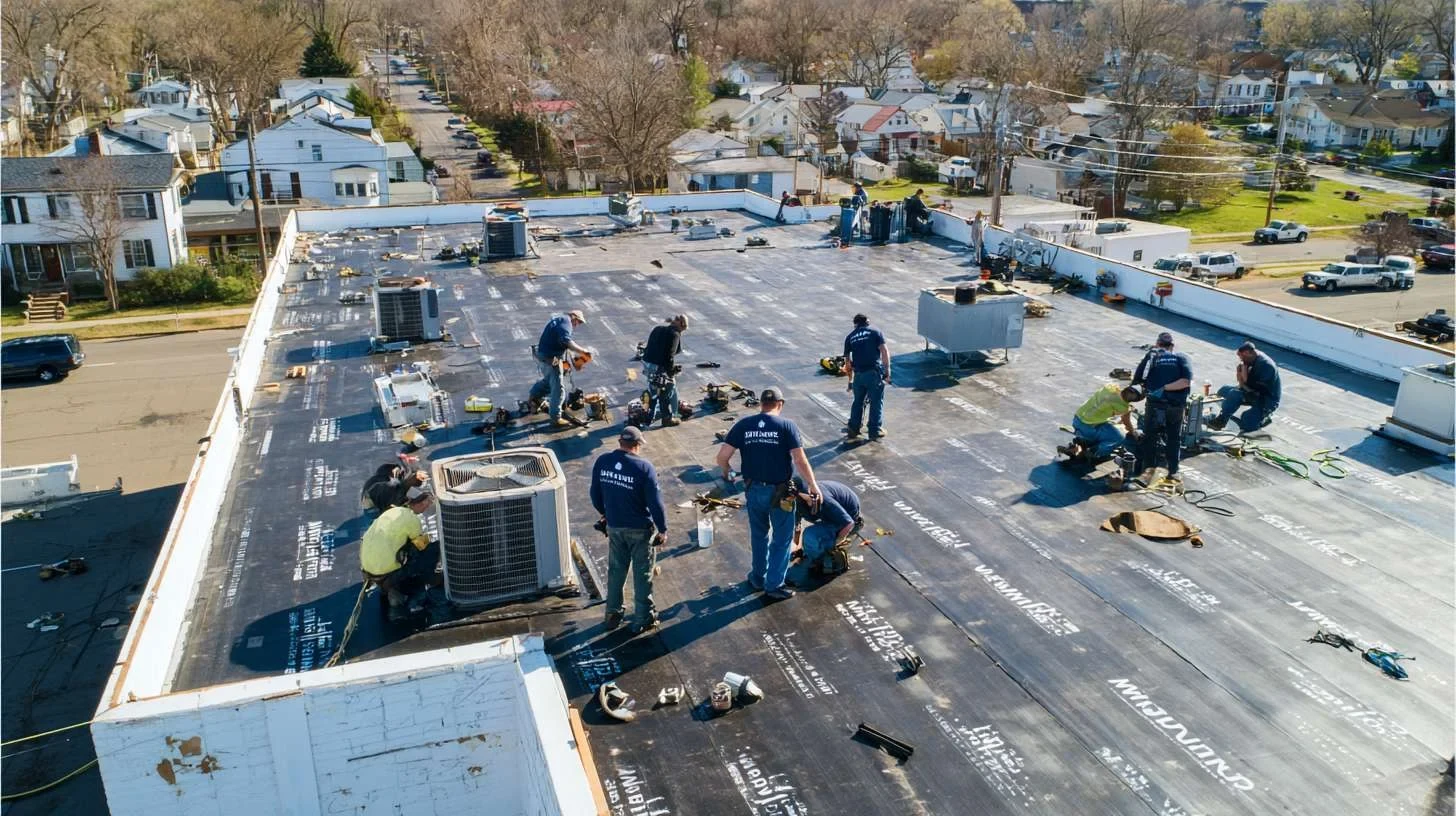
Drainage Capacity Sized for a Fast Spring Melt, not simply a Rainstorm
A drain or scupper system that handles a summer thunderstorm fine can still fall short during a rapid spring melt, when weeks of accumulated snow and ice come off a roof in a matter of days. We evaluate drainage capacity against both scenarios, not simply the rainfall tables most drain sizing defaults to.
Why Ponding Water Isn't a Small Problem
Standing water on a low-slope roof adds dead load the structure has to carry, and it accelerates membrane wear at the ponded area faster than anywhere else on the roof. A drain that's undersized, clogged, or set at the wrong elevation relative to the roof's actual low points is usually the root cause when we find chronic ponding.
Ponding also masks small membrane problems. A pinhole leak under standing water is far more likely to actively feed water through a breach than the same size defect on a dry section of roof, which is part of why we check drain performance as a leak-prevention measure, not simply a housekeeping item.
Snowmelt Volume and Drain Sizing
Drains sized only to local rainfall intensity tables can be undersized for the volume Wisconsin winters actually produce. When a warm spell hits after a heavy bay-effect snow accumulation, a large roof can shed a significant volume of water in a short window, and if the drain count or size can't keep up, water backs up faster than it can leave.
We size drain and scupper capacity against both the rainfall design event and a realistic snowmelt scenario for the roof's size and pitch, which sometimes means adding a drain or upsizing an existing one rather than assuming the original design accounted for it.
Freeze Protection at Drains and Scuppers
A drain bowl or scupper opening that ices over stops functioning exactly when meltwater volume is highest, which is how a lot of ice-dam-related leaks actually start. We check for ice buildup at every drain during fall and winter inspection visits, and heat cable or heat tape around the drain bowl is a common fix for chronically icing drains that can't be corrected through slope or capacity changes alone.
Scuppers, which drain over the roof edge rather than through it, have their own freeze pattern: ice can build up at the opening and dam water behind it even though the scupper itself isn't clogged with debris. We check both the opening and the discharge path during inspections.
What Drain and Scupper Service Includes
- Debris clearing at every drain bowl and scupper opening
- Capacity evaluation against rainfall and realistic snowmelt volume
- Slope and low-point check to confirm water actually reaches the drains
- Drain bowl and clamping ring resealing where seals have failed
- Freeze protection assessment, including heat cable where warranted
- Scupper opening and downspout discharge path inspection
Pricing Drainage Work
Drain and scupper repair or resealing is a targeted, per-fixture cost, and adding capacity, whether that's a new drain or an upsized scupper, is priced as its own line item tied to the roof area it serves. We'll show the lifecycle math on adding drainage capacity against the cost of repeated ponding-related membrane repair, since the two are directly connected on most of the roofs where we find chronic ponding.
For larger roofs, especially warehouse and distribution buildings with big open field areas, drainage capacity is one of the cheaper corrections available relative to the membrane damage it prevents, and we'll flag it during any inspection even if it wasn't the reason for the call.
Drainage Questions We Get
How do I know if our roof has enough drains?
Chronic ponding water that doesn't clear within 48 hours of dry weather is the main sign. We evaluate drain count and capacity against your roof's size and slope during an inspection and can tell you whether the issue is capacity, clogging, or a low spot the drains weren't set to catch.
What's the difference between a drain and a scupper?
A drain sits within the roof field and carries water down through the building's interior plumbing; a scupper is an opening at the roof edge or parapet that lets water discharge externally, usually into a gutter or downspout. Many roofs use both, depending on the layout.
Why does the same drain keep icing over every winter?
Usually a combination of low water flow reaching that drain and cold exposure at the bowl itself. We look at whether slope corrections would get more active water flow through the drain before recommending heat cable as the fix.
Can adding a drain really prevent leaks somewhere else on the roof?
Yes, when the leak pattern is tied to ponding water finding a weak point in the membrane. Reducing how long water sits on a given section reduces the stress on that membrane area, which is a real prevention measure, not simply a drainage convenience.
How often should drains be cleared?
At minimum during spring and fall inspection visits, but buildings near trees or with heavy debris exposure sometimes need it more often. We'll recommend a frequency based on what we find during the first year of visits to your specific roof.