Service Areas
Commercial Roofing Contractors Broadway District, WI
Commercial Roofers in Broadway District
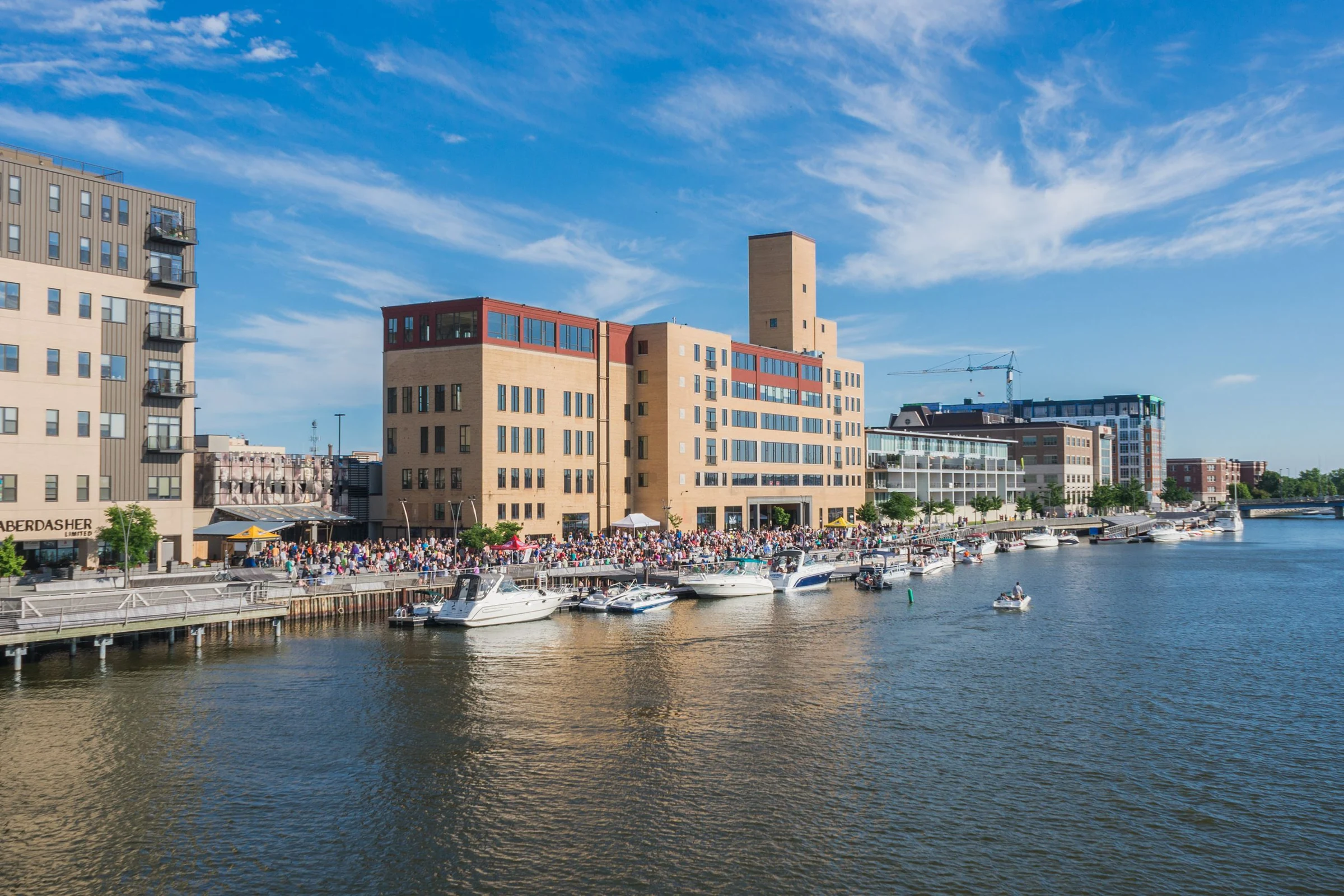
Commercial roofers serving Broadway District should document leak sources, wet insulation, drainage, edge details, penetrations, and repair history before recommending a scope. The Broadway District runs along the west bank of the Fox River across from downtown, a stretch of cream city brick warehouses and old rail-adjacent commercial buildings that's spent the last two decades turning into breweries, restaurants, and event space. Titletown Brewing Company's home in the old railroad depot is the anchor most people know, but the roofs behind that transformation are the harder problem: century-old brick buildings carrying modern kitchen exhaust loads, rooftop patios, and mechanical equipment they were never designed for.
Old Brick, New Rooftop Load
A lot of Broadway's building stock started as warehouse and light-industrial space with simple flat roofs meant to shed water and not much else. Converting those buildings into restaurants and breweries adds walk-in coolers, grease-trap venting, kitchen makeup air units, and in several cases rooftop dining or patio structures; all of it point loads and penetrations the original roof deck never carried.
We spend more time on structural and penetration review on a Broadway job than we would on a standard commercial reroof, because the roof assembly and what's sitting on top of it usually don't match anymore. Getting that wrong on a kitchen exhaust curb means a leak that shows up as water in the dining room below, a different repair scope than a wet ceiling tile in a back office.
Historic Building Constraints on Membrane Choice
Several Broadway buildings carry historic designation or sit close enough to designated blocks that exterior changes get more scrutiny than a standard commercial building would. That mostly affects parapet and cornice-line work rather than the field membrane itself, but we flag it early since a permit delay on a historic-adjacent building can push a restaurant's reopening date in a way owners don't always anticipate.
For the membrane itself, TPO and modified bitumen both see regular use on Broadway roofs depending on the deck condition and how much of the existing roof assembly is salvageable. On buildings with heavy kitchen grease exposure near exhaust penetrations, we lean toward systems and flashing details that hold up better against grease migration than a standard field seam would.
- Kitchen exhaust curb and grease-trap vent flashing on restaurant and brewery roofs
- Structural review before adding rooftop patio or dining loads to older buildings
- TPO and modified bitumen recover on converted warehouse decks
- Parapet and cornice flashing repair on brick buildings near historic blocks
- Emergency leak response timed around restaurant service hours
- Coordination with tenant build-out schedules on new restaurant openings
Working Around Live Kitchens and Event Nights
Broadway is a working entertainment corridor most evenings and all weekend, and a roof crew staging equipment on a loading dock or blocking an alley during a Friday dinner rush creates a problem for the tenant that has nothing to do with roofing quality. We schedule noisy or disruptive phases; tear-off, hot work, crane or lift staging; around a restaurant or brewery's service hours whenever the building allows it, usually meaning early mornings or Monday-through-Wednesday windows.
Grease and cooking exhaust also mean roof access has to account for what's venting nearby, both for our crew's safety around hot exhaust air and for keeping tear-off debris away from open kitchen intakes. That's a coordination item we handle before the job starts, not something we figure out on site.
Fox River Moisture and Winter Ice on Flat Roofs
Being right on the river means Broadway buildings pick up more ambient humidity than blocks further from the water, which slows roof drying after rain and adds to the freeze-thaw stress every flat roof in Green Bay deals with each winter. On buildings with rooftop kitchen equipment adding heat loss through the roof deck, we sometimes see uneven snow melt and ice dam formation at parapet lines that a purely commercial building without that heat signature wouldn't show.
We check drain capacity and scupper condition closely on Broadway roofs for that reason; a clogged or undersized drain on a building already dealing with uneven ice buildup backs water up fast, and on an occupied restaurant that means damage to a dining room, a different repair scope than an empty warehouse floor.
Budgeting a Restaurant Roof Against Downtime Cost
A restaurant or brewery loses revenue every hour it's closed, which changes how we price a Broadway job compared to a vacant commercial building where schedule flexibility costs the owner nothing. We phase tear-off and recover work section by section on occupied buildings so the kitchen stays operational, even if that adds mobilization days compared to a single continuous tear-off on an empty building.
Broadway District Roofing Questions
Can you work around our brewery or restaurant's operating hours?
Yes. We schedule tear-off, hot work, and equipment staging around service hours whenever the building layout allows it, usually early mornings or slower weekday windows.
Do older brick buildings need different roofing than newer construction?
Often, yes. Historic-adjacent parapet and cornice details, plus decks that weren't built for modern kitchen loads, mean we do more structural and penetration review on Broadway buildings than on a standard commercial reroof.
Can you flash around kitchen exhaust and grease-trap vents?
That's a regular part of restaurant and brewery roof work in this district. We detail those penetrations for grease exposure specifically, beyond what standard roof-penetration flashing covers.
What roofing system handles a rooftop patio or dining structure best?
That depends on the existing deck's load capacity, which we check before recommending a system. Adding rooftop occupancy to an older building sometimes requires structural work before the roofing decision even comes into play.
How fast can you respond to a leak during business hours?
We prioritize emergency tarp and dry-in on active leaks over occupied dining or kitchen space, since water intrusion there affects the business immediately, beyond the roof itself.