
Commercial Project Types
Grocery Store Roofing in Green Bay, WI
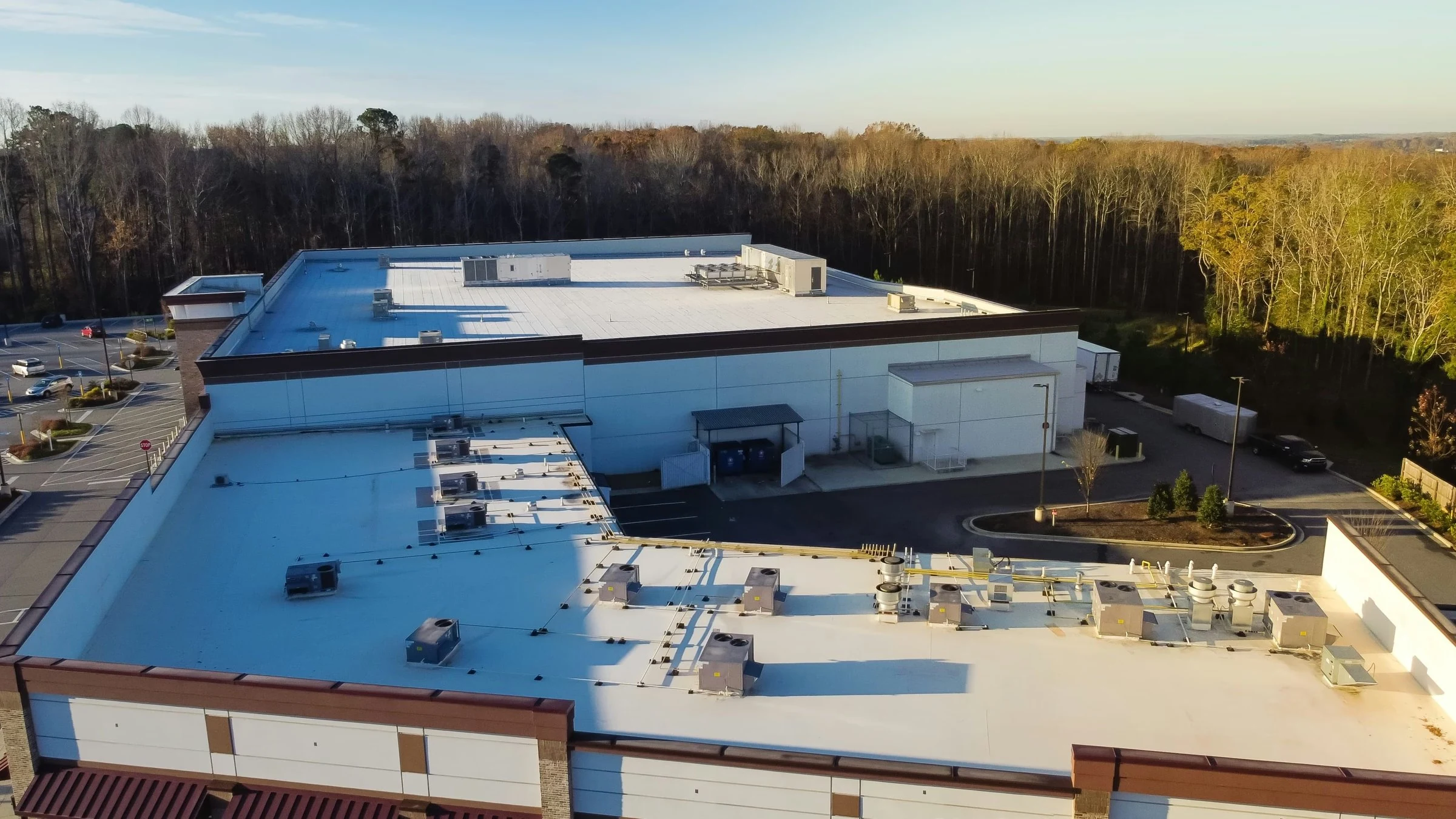
A Grocery Roof's Condition Depends as Much on Lease History as on Membrane Age
Wisconsin-based chains like Festival Foods and Piggly Wiggly anchor a lot of the grocery footprint in and around Green Bay, alongside large-format operators like Woodman's Markets, and each of those store types loads a roof differently depending on format, refrigeration count, and whether the building started life as a grocery store or was converted into one.
Converted Big-Box Shells Carry a Roof Designed for a Different Tenant
Some grocery locations in this market moved into shells originally built for a discount or general-merchandise retailer, and a conversion like that usually means the roof was designed around a lighter mechanical load than a full-service grocery store needs. Refrigeration condensers, bakery exhaust, and expanded HVAC for produce and dairy zones often get added after the fact, cutting new curbs into a roof that wasn't engineered with that equipment in mind from day one.
We review the original roof design and structural capacity before any conversion project adds rooftop equipment, since a retrofit that skips this step is one of the more common causes of premature membrane failure we find on converted grocery buildings years later.
Refrigeration Condenser Count Scales With Store Format Rather Than Square Footage Alone
A large-format warehouse-club-style grocery store can carry a denser bank of refrigeration condensers than a smaller neighborhood format, even on a proportionally similar roof area, because the mix of frozen, dairy, and prepared-food cases scales differently by concept. We map the actual condenser count and curb condition rather than assuming a standard ratio based on square footage alone.
Condenser vibration and grease-laden exhaust from in-store bakery and deli operations both wear curb flashing faster than the open field, so we inspect those zones on a shorter cycle than the rest of the roof regardless of which chain or format we're working on.
Lease Turnover and CAM Responsibility Complicate Who Actually Calls Us
Grocery-anchored retail centers often split roof responsibility between the anchor tenant's lease and the property owner's common-area maintenance structure, and that split isn't always clear on an aging building where the original lease has been amended or assigned more than once. We help property managers and grocery operators sort out scope and responsibility before a project starts, since a roof dispute mid-lease is a worse outcome for everyone than clarifying it up front.
Where a grocery anchor sits inside a larger strip center with smaller inline tenants, roof age can vary by section even though the whole roof reads as one continuous field from the parking lot. We document those age and system differences separately so a landlord isn't quoted one blended number for a roof that actually needs two different scopes of work.
Reroofing an Occupied Grocery Store Means Protecting the Perishable Inventory Alongside the Building
A grocery anchor closing for reroofing isn't realistic for the tenant or the landlord, so we plan these projects in sections, working over the sales floor in phases and keeping refrigeration equipment operational throughout. A temperature excursion on perishable inventory during a project is a cost that goes well beyond the roofing budget, so we build refrigeration protection into the schedule rather than treating it as the store manager's problem to handle separately.
- Original roof design and structural capacity reviewed before any conversion adds rooftop equipment
- Actual condenser count and curb condition mapped rather than assumed from square footage alone
- Bakery and deli exhaust penetrations flashed with grease-resistant materials and checked more often
- Roof responsibility clarified between anchor lease and property CAM structure before work starts
- Reroofing phased in sections to keep the sales floor and refrigeration equipment operational
- Snow and ice around rooftop refrigeration equipment monitored separately each winter
Winter Meltwater Around Refrigeration Equipment Refreezes in a Pattern the Rest of the Roof Doesn't Show
Heat rejection from refrigeration condensers can melt snow unevenly around those units during a Wisconsin winter, and that meltwater sometimes refreezes at nearby curbs and flashing overnight, creating a localized ice problem the rest of the roof doesn't have. We watch for this pattern specifically at grocery anchors during winter inspection visits rather than assuming snow melts and drains uniformly across the field.
Loading dock and freight receiving areas at the rear of a grocery building see their own drainage stress during a heavy snow season, since delivery traffic keeps that section active even when the rest of the roof sits undisturbed, and we check dock canopy drainage there on the same shorter cycle as the refrigeration zones.
Questions Grocery Operators and Landlords Ask Us
Does a converted big-box grocery store need extra roof review before opening?
Yes. We check whether the original roof was designed for the added refrigeration and exhaust load a full grocery format requires before any conversion work adds new curbs.
Why do larger-format stores sometimes need more roof attention than square footage alone suggests?
Refrigeration condenser count scales with the store's product mix as much as its overall size, so we map actual equipment rather than assuming a standard ratio.
Who's responsible for the roof when a grocery lease has been amended or assigned?
It depends on the specific lease and CAM language, and we help property managers and tenants sort out that responsibility before a project starts rather than after a dispute begins.
Can a grocery store stay open during reroofing?
Yes, we phase the work in sections and keep refrigeration equipment running throughout, which is the standard approach for occupied grocery-anchor projects.
Does winter create unique problems for grocery roofs specifically?
Uneven snowmelt around refrigeration condensers can refreeze at nearby curbs overnight, and loading dock areas see extra drainage stress from ongoing delivery traffic, so we watch both zones closely each winter.