
Commercial Roofing Services
PVC Roofing in Green Bay, WI
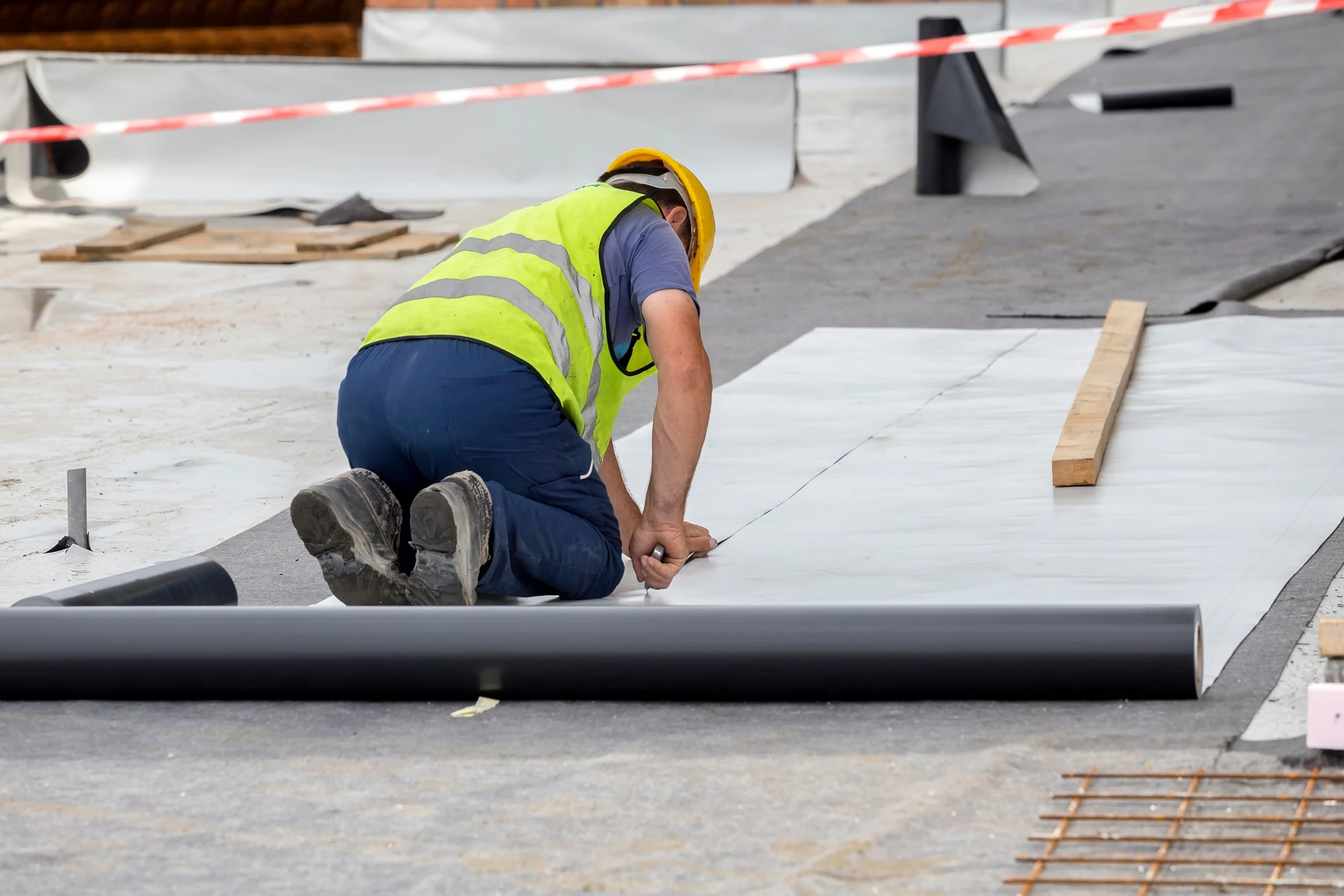
PVC Roof Installation for Grease and Chemical-Exposed Green Bay Buildings
PVC costs more per square foot than TPO or EPDM, and on roofs exposed to grease, oil, or industrial chemical drift, that extra cost buys a membrane that does not need replacing years before the rest of the building's mechanical systems. We spec PVC on food processing plants, restaurant-anchored retail, and buildings near industrial exhaust where the field membrane sees real chemical exposure.
Where PVC's Chemical Resistance Actually Matters
PVC's plasticized vinyl chemistry resists petroleum-based oils, greases, and many industrial chemicals significantly better than the rubber and polyolefin chemistries in EPDM and standard TPO. Around Green Bay that matters most on food processing plants with kitchen or process exhaust discharge, and on buildings near mill operations where exhaust condensate can carry chemical residue onto the roof surface.
We do not spec PVC on every job. On a clean warehouse roof with no exhaust discharge, the extra cost over TPO does not buy the owner anything, and we say so in the estimate rather than upselling a membrane the roof does not need.
Hot-Air Welded Seams at Detail-Heavy Roofs
Like TPO, PVC seams are hot-air welded into a fused bond rather than adhered, which gives the same freeze-thaw advantage over adhesive-bonded EPDM seams. PVC is also a stiffer sheet, which some crews find welds more consistently in cooler ambient conditions, though we still hold every install to the manufacturer's stated temperature window regardless of the sheet's stiffness.
On food processing plants with dense rooftop exhaust equipment, detail work at every curb and pipe penetration adds up fast, and PVC's weldability at those details is as important to the final result as the field membrane's chemical resistance.
Heavier Detail Work at Grease-Exposed Curbs
Kitchen and processing exhaust fans are usually the dirtiest single detail on a food plant roof, and the flashing right around that curb takes the heaviest contamination on the whole surface. We spec heavier-gauge PVC detail pieces at those specific curbs even when the rest of the field membrane runs standard weight, because that localized exposure wears faster than the general roof field ever will.
What a PVC Installation Includes
- Assessment of actual exhaust and chemical exposure before finalizing membrane spec
- Insulation and cover board sized to structural capacity and code
- Reinforced or fleece-backed PVC membrane matched to the exposure level
- Hot-air welded seams probed and documented at every lap and detail
- Heavier-gauge detail pieces at exhaust curbs and high-contamination zones
- Fastening pattern matched to actual rooftop equipment layout and wind exposure
Cost Per Square Foot Against Avoided Early Replacement
PVC typically runs highest among the single-plies on installed cost per square foot. We present that number against the realistic alternative: a cheaper membrane that degrades under chemical exposure and needs full replacement inside ten years instead of running a normal twenty-plus year service life. On the right building, PVC's higher install cost produces a lower cost per square foot per year of actual service.
On buildings with mixed exposure, meaning some sections see grease discharge and others do not, we sometimes spec PVC only at the affected zone and a more economical membrane elsewhere, tied together with a compatible transition detail rather than PVC across the whole roof.
Snow Load and Structural Review on Older Plant Buildings
Some of the older paper mill and processing plant buildings around Green Bay predate current snow load code and were not designed with today's rooftop equipment density in mind. We check existing structural capacity before adding a PVC recover assembly on that kind of building rather than assuming the original design carries the new load.
Snow drift patterns around dense exhaust and refrigeration equipment can load a section of roof well past the average design snow load for the building, so we map equipment layout against prevailing wind direction before finalizing a fastening pattern rather than defaulting to a single spec across the whole field.
Reinforced vs Fleece-Backed PVC
Standard reinforced PVC uses an internal scrim for tear and puncture resistance, and it is the more common spec on new construction and full tear-off jobs. Fleece-backed PVC adds a fabric layer to the underside of the membrane, which improves puncture resistance further and changes the attachment method to an adhesive bond rather than mechanical fastening or hot-air induction welding.
We recommend fleece-backed PVC most often on recover projects over an irregular substrate, where the fleece backing helps the membrane bridge minor surface imperfections that a standard reinforced sheet would telegraph through over time.
PVC Roofing Questions From Plant Owners
Will PVC handle direct grease exhaust discharge indefinitely?
PVC handles grease and oil exposure meaningfully better than EPDM or standard TPO, but heavy, sustained direct discharge should still be filtered or redirected where possible. No membrane is maintenance-free under constant grease contact.
Can PVC be installed over an existing EPDM roof?
Compatibility issues exist between PVC and certain EPDM adhesives and asphalt-based products, so a recover over existing EPDM needs a compatible separator layer or a full tear-off, evaluated case by case.
Does PVC perform differently than TPO in cold weather?
The flexibility characteristics differ slightly, but both are heat-welded single-plies with comparable cold-weather seam performance when installed within the manufacturer's temperature window.
How often should a PVC roof with active exhaust exposure be inspected?
We recommend at least twice-yearly inspections on roofs with ongoing chemical or grease exhaust, compared with the standard annual inspection on a clean roof, with extra attention paid to detail work at exhaust curbs.
Is PVC a good fit for a roof with no chemical exposure at all?
Usually not the most economical choice. On a clean roof, TPO generally delivers comparable performance at a lower installed cost, and we will say so rather than sell PVC where it is not needed.